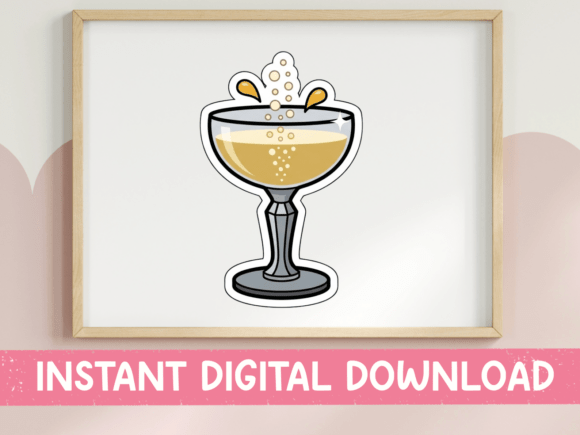
Champagne Coupe Glass Sticker
A Vintage Toast, Stitched Right
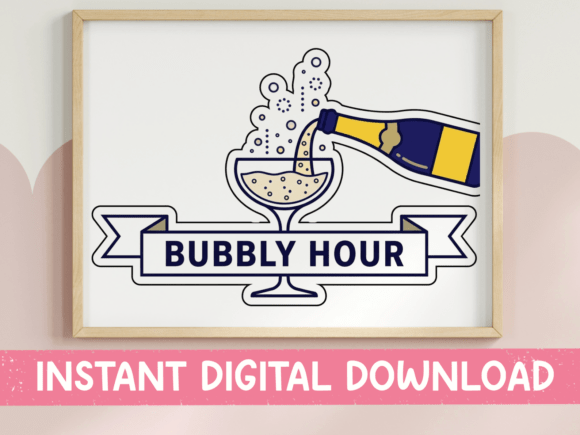
As someone who’s stitched thousands of designs across apparel, home goods, and personalized gifts, the Champagne Coupe Glass Sticker landed on my desk just before a client meeting for a boutique bridal shower tote collection. My first impression? It breathes quiet celebration — not loud or cartoonish, but elegant, nostalgic, and effortlessly refined. The single coupe silhouette feels intentional: clean lines, generous negative space, and that delicate overflow of golden bubbly with foam spilling just over the rim. Tiny bubbles rise upward like whispered confetti. This isn’t a busy graphic — it’s a moment captured in line and shape. That restraint is exactly what makes it promising for real embroidery work.
Where It Shines (and Where It Asks for Care)
I tested the Champagne Coupe Glass Sticker on three real projects: a medium-weight cotton tote bag, a lightweight baby onesie, and a structured twill apron. On the tote, it stitched cleanly at 3.5" wide — the satin-stitched rim held crispness, the foam spill read as soft texture rather than jagged fill, and the bubbles translated into subtle running-stitch accents. Customers responded immediately: “It looks handmade, not printed,” one said, holding it up to natural light.
On the onesie? More caution was needed. The design’s graceful curves and fine foam detail require stable hooping and lightweight tear-away stabilizer. Without it, the tiny bubbles blurred slightly on the knit fabric — not ruined, but softened beyond the vintage charm intended. For baby embroidery, I’d recommend using it only on pre-shrunk, tightly woven cotton blends — never on ultra-soft bamboo knits unless paired with cutaway stabilizer and reduced stitch density.
The apron test confirmed its strength in structured, low-stretch contexts. Here, the Champagne Coupe Glass Sticker read beautifully as a focal point above the pocket — professional, warm, and unmistakably celebratory without shouting. It fit seamlessly into a small shop product line alongside monogrammed tea towels and embroidered cocktail napkin sets.
Fabric & Fit: Know Your Surface
This design leans into elegance, so it performs best where clarity and contrast support that mood. On dark fabrics — charcoal sweatshirts or navy totes — use high-contrast thread (ivory, gold metallic, or warm champagne) to preserve the foam’s delicacy. On light fabrics, avoid overly pale threads; they’ll disappear against the background and mute the effervescence.
Curved surfaces like caps or curved pillow covers demand careful placement. The coupe’s open top and flowing foam don’t wrap well around tight contours — I’d skip it for front-panel cap embroidery unless scaled down significantly and re-digitized for curvature. Similarly, dense, textured fabrics (like heavy terry cloth or bouclé) can swallow the finer bubble details. Save it for smooth weaves: poplin, quilting cotton, midweight denim, or brushed poly-cotton blends.
For holiday embroidery or wedding gifts, the Champagne Coupe Glass Sticker adds instant sophistication to kitchen towels, linen napkins, or minimalist clutch bags. It reads as thoughtful — not generic — which lifts perceived value. Etsy sellers tell me customers pay 15–20% more for items featuring this kind of curated, theme-driven graphic versus clip-art alternatives.
Design Integrity in Motion
What makes this more than just a pretty graphic is how it holds up across applications. As a machine embroidery design, it avoids over-engineering: no excessive underlay, no unnecessary jump stitches, and balanced stitch density that prevents puckering on medium-weight fabrics. That matters when you’re batching 30 embroidered patches for a craft fair or fulfilling custom apparel orders for a local wine bar.
It also scales well — from 2.25" on a child’s bib to 4.5" on a sweatshirt chest placement — without losing legibility. The foam spill remains expressive, the glass rim stays defined. That versatility is rare in T-Shirt Designs meant for graphics-first use. Most similar motifs collapse at smaller sizes or turn muddy on stretchy blanks.
Practical Notes Every Embroiderer Should Check
- Test first — Always run a sample on scrap fabric matching your final project’s weight and stretch.
- Stabilizer matters — Use tear-away for stable wovens, cutaway for knits or lightweight fabrics.
- Thread color contrast — Golden thread pops on navy; ivory shines on black; avoid beige-on-cream unless intentionally muted.
- Hoop size — Confirm the design fits comfortably within your standard hoop — no cramming corners.
- Review small details — Zoom in on the foam edge and bubble trails in your embroidery software. Are they clean, or do they suggest potential fraying?
- Mock it both ways — Generate printable mockups on light and dark backgrounds. Does the Champagne Coupe Glass Sticker retain personality in both?
- Licensing check — If selling finished products or digital embroidery files, verify commercial use rights. Not all Graphics are cleared for resale.
Final Thought: A Design That Earns Its Place
The Champagne Coupe Glass Sticker doesn’t try to be everything. It’s not a full scene, a slogan, or a complex emblem. It’s a single, confident gesture — a toast in thread. That focus is its strength. When used intentionally — on a linen apron for a sommelier’s gift, a cotton tote for a champagne brand pop-up, or a baby onesie for a “bubbly arrival” announcement — it elevates the handmade product without overwhelming it.
For craft business owners and Etsy sellers, it’s a reliable anchor piece: easy to pair with monograms, simple enough for beginner stitchers to execute well, and distinctive enough to build brand recognition over time. It doesn’t shout “celebration” — it invites the viewer in, quietly, like the first sip from a well-chilled glass. And in embroidery, where every stitch carries weight, that kind of intentionality is worth more than sparkle alone.